



Today’s top listening
Way more killer than filler
Containing at least three or four stunning tracks, Lars Danielsson on Trio ignites an extraordinary strike rate on an album that isn’t in your face or obviously gunning for instant impact.
But impact nevertheless it drops like fundamental gravity in quantity everywhere.
With guitar the main harmony instrument instead of piano within a two pronged attack in Liberetto although that same guitar player Englishman John Parricelli, very significant on an album that has as much a Mediterranean feel as it comes complete with Nordic mannerisms, goes back to the first of Danielsson’s magisterial Liberetto records and has been an enduring presence since with the Swedish bassist-cellist leader Lars Danielsson.
Floating feeling
The other factor, even more telling, is the floating nature of what’s here given that there is no guiding drummer or percussionist present.
With Danielsson tunes to the fore early on pure arthouse so moving and quietly compelling ‘Le Calme au Château’ proves in its own unforced way.
No drums. No noise. No daft metronomic click tracks. No relentless groove.
No electronic mists descend. ‘Le Calme au Château’ wasn’t recorded with everyone remote in different countries making ample use of the Internet. It literally has vintage appeal given it was recorded in a winery in France.
Duelling with latency issues, the vagueries of different time zones affecting players’ circadian rhythms or the high anxiety of not being able to look into one another’s eyes in the flesh don’t apply.
Worcestershire sauce
There is no fakery. The provenance is a wood-panelled room located in the Bordeaux wine region of France.
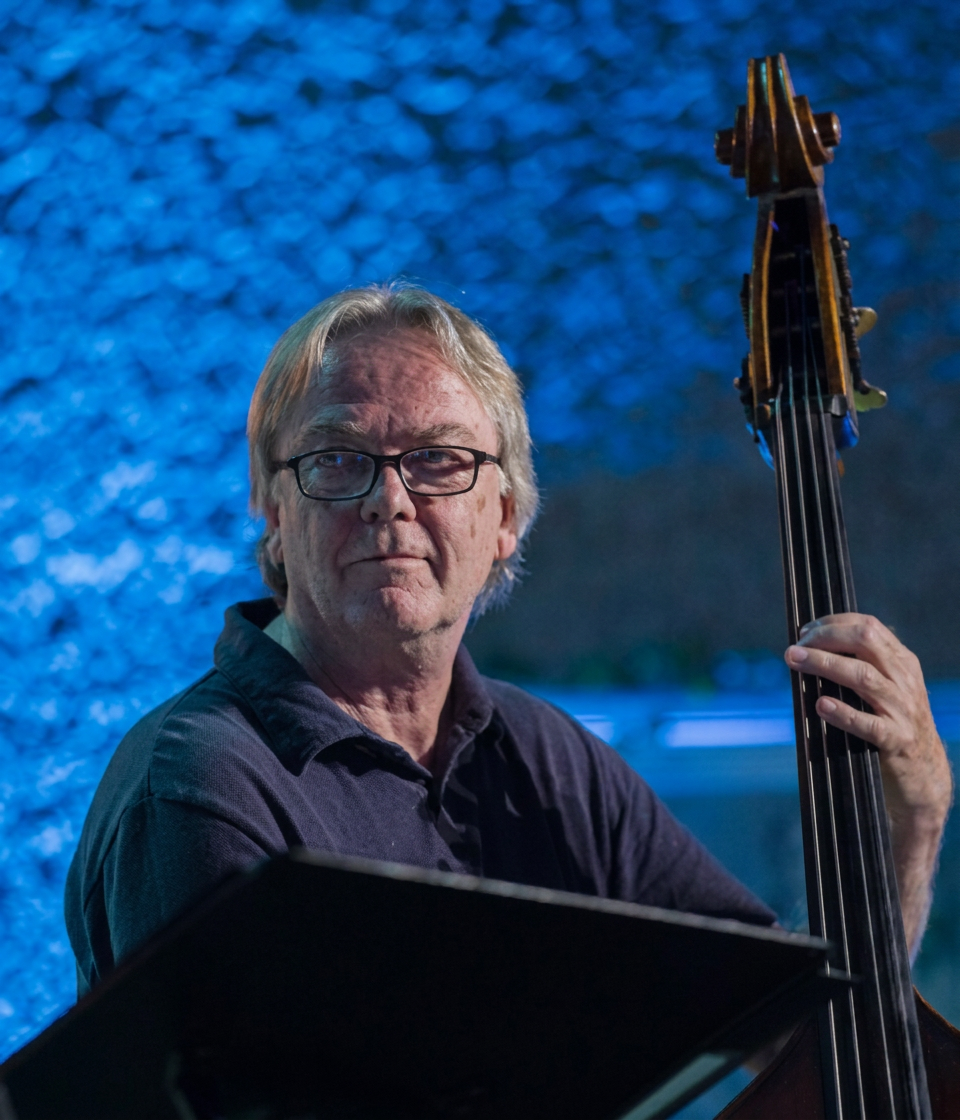
English guitarist the Worcestershire born Parricelli (65) known for his work in Danielsson’s widely toured Liberetto joins the 66 year old Swede. Trumpeter Verneri Pohjola, a relative whippersnapper of 46, of the Finnish innovators Ilmiliekki Quartet completes the multi national line-up. He plays the main melodic forays and acts as a kind of muse for the others when the melody becomes that bit more significant as it often does. A dancing gavotte-like passage just as easily jostles with big riffs and heart on sleeve tendencies are dotted throughout.
Closure and acceptance
The lyrics of the Hélène song instrumentally rendered here revolve around a September night at the remains of the day. The protagonist says to her lover, the character of Pierre Bérard in the film played by Michel Piccoli, that love is over with the response that they had to break up and that it’s better this way. He won’t write. A closing the book on their time together song. Le soleil n’y entrera plus – ”the sun will no longer enter it.”
It was first heard in the Sautet directed Les Choses de la Vie (‘The Things of Life’). Danielsson in his Palmer Edition II: Trio version leads off with arco lines accompanied in an intricate late Renaissance type guitar manner by Parricelli before the entrancing trumpet lines of Pohjola make their presence felt. And then there’s a certain paraphrasing of the theme in the arrangement and a move towards the bridge.
Hopes and dreams
‘And if we’d get up off our knees why then we’d see the forest for the trees’ – Ron Sexmith
It took me longer to get used to the very different in context Ron Sexsmith song of hope ‘Gold in Them Hills’ from the Cobblestone Runway 2002 album, mainly because the cooing sound of Chris Martin usually brings me out in a rash, later covered by a number of artists including Katie ‘Nine Million Bicycles’ Melua.
Its poignancy opens up another gleaming shaft of light that the trio are beaverishly intent on locating and there certainly is a good range in the A&R-ing that has resulted in the choice of tune titles.
Pohjola is at his most melodic and heartfelt on the Sexsmith. And cleverly in the sequence this very mainstream pop choice is followed by an oblique improvisation cloaked in an electronic haze and full of exploratory fragments that as soundscapery works very well indeed. It’s a reminder that you can be free (and not sound anarchic) and improvise in all sorts of ways.
An insertion of ‘Mood Indigo’ is perhaps an indulgence too far but its after hours feel works OK and again acts as a reset. That could have been that. But it’s not. And so then we reach another Danielsson piece ‘Étude Bleue’ followed by one each from his bandmates that prove less essential but nevertheless immaculately delivered.
And yet the album won’t be on any Gilles Peterson type hipster radar any time soon. You might be muttering that’s in its favour! Ravey daverie there is none. No-one dances around a maypole after a few vin rouges or exclaims up the gooners. Jeez, geezer, venturing pre-slipper and pantaloon phase perchance slipping out of the DJ booth for a minute tune in: you’ll be amazed.











You must be logged in to post a comment.