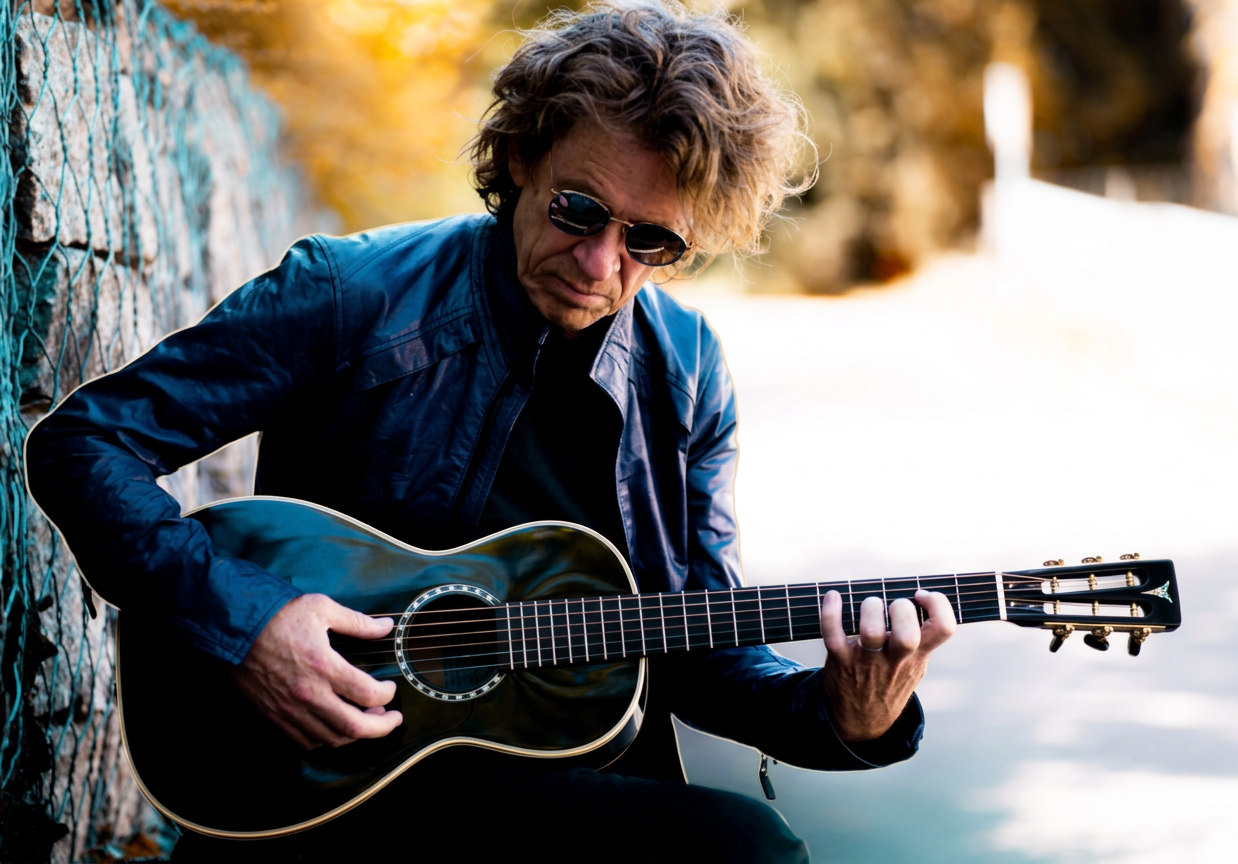



Russell Gunn photo: Sven “Kosi” Kosakowski
Russell Gunn turns to ancient Egypt, African American history and the politics of cultural memory that brings together his new sextet Blackhawk, hip-hop, church music and hard driving contemporary jazz. It recasts the idea of an ancient guide to the afterlife as a call to understand the past and live better in the present.
Radio listeners may remember the trumpeter’s ‘Seventy Four Miles Away’, composed by Joe Zawinul he recorded and released on Ethnomusicology, Volume 1 (Atlantic, 1999) used as the signature tune of BBC Radio 3’s much missed Jazz on 3, presented by Jez Nelson run in the noughties.
Turning to the now, Gunn’s own compositions are pretty stirring and sit deliciously alongside Duke Ellington’s ‘East St. Louis Toodle-Oo’, apt for a trumpeter whose formative years were spent in East St. Louis after his family moved there from Chicago in 1980.
The album’s title draws on the ancient Egyptian Book of the Dead – Sun Ra also inspired massively by it termed it the “Book of the Reawakening”. Gunn describes the music as an affirmation of what his ancestors created and achieved, challenging sanitised versions of history while encouraging a stronger sense of identity, knowledge and self-belief.
Not nearly as militant sounding as the title suggests the album is nevertheless a serious and focused intellectual statement and introduces Blackhawk featuring saxophonist Kendrick Smith, trombonist Andre Hayward, pianist Kevin Bales, bassist Kevin ‘Raw Dog’ Smith and drummer Jeremy ‘Bean’ Clemons.
The musicians come principally from East St. Louis and Atlanta, where Gunn now lives. The band’s name acknowledges the trumpeter’s admiration for Miles Davis’ In Person Friday and Saturday Nights at the Blackhawk.
The wider cast on the album includes turntablist Sean Falyon, Hammond B3 organist Larry Wilson, guitarist Rod Harris Jr, percussionists Mino Cinelu known for his work with Miles Davis on his post comeback classic Decoy, Ali Barr, baritone saxophonist Jamel Mitchell, saxophonist Carlos Brown Jr and spoken-word artist Ken ‘K Solo 007’ Wells.
Opening track ‘Folkz’ is a new version of a composition associated with Gunn’s aforementioned Ethnomusicology, Volume 1, [above] that earned RG his first Grammy nomination and stands as his best known work partly in UK eyes anyway because of its use on the Radio 3 programme, a show that no jazz show on Radio 3 since has matched. I just switch off nowadays and don’t listen to Radio 3’s jazz output at all and haven’t done for quite a while horrified by what has happened to the station since the jazz simpatico Roger Wright’s departure as controller in 2014. Investing in crass exercises like mindful mixes and Unwind on the classical side is more for people who treat music as a lifestyle product for the background rather than for people who actually want to listen in the foreground. But things may even get worse now on BBC Radio with news just this week that 4 Extra is going. No genre is safe in the Matt Brittin era as the BBC fights to save the licence fee – if that even is what Brittin wants facing charter renewal and all the Byzantine manoeuvring that entails.
‘Pan Afrikan Invocation’ has an appealing organ-led opening that evokes the solemnity of a Black church service.
‘The Rule of Two’ turns to Star Wars mythology and the struggle between those who hold power and those who seek to take it.
As the world watches on in horror at the shitshow to rival all shitshows of Trump’s second administration it’s sobering to keep first and foremost in mind once again that power can be corrupted and used and abused wholescale even in a proud nation that values touchstones like democracy to justify its ethos.
‘Cahokia Pyramids’ is my favourite track among the originals and I like the Ellington treatment too.
A largely stimulating album, then, this all draws on the history of the ancient settlement near present-day St Louis, one of the most significant pre-Columbian urban centres in North America.
Ellington and Bubber Miley’s ‘East St. Louis Toodle-Oo’, first recorded in 1926, brings the album back to Gunn’s own background. Yes, the personal is political… and musical. It’s all connected.
‘Pan-Afrikan Benediction’ returns to the church-service framework of the invocation.
Born in Chicago in 1971, the trumpeter became interested in hip-hop before taking up the trumpet at the age of 10. He studied at Jackson State University in Mississippi before returning to the St Louis area, where saxophonist Oliver Lake [esteemed from the World Saxophone Quartet] became an early supporter.
Gunn was interestingly in Branford Marsalis’ tremendous jazz and hip-hop collective the happening Buckshot LeFonque which was a big and at times cartoonish diversion and interlude for Branford at that stage of his career. LeFonque the name was a pseudonym Cannonball Adderley used to use on the Here Comes Louis Smith album.
His own debut as a leader, Young Gunn [the original is highly collectable] now known with extra material as Young Gunn Plus initially appeared on Muse in 1995.
This year Gunn toured with Miller’s We Want Miles band, marking the centenary of Miles’ birth. Gunn has cited Davis alongside Clifford Brown, Booker Little, Lee Morgan and Freddie Hubbard among his trumpet influences.