


This is quite exciting. Delete “quite”. Insert in its place “very”. Tell you why in a minute. But it’s a memory test to begin with, speaking personally as a long time jazz listener. So, I’ll take you back to 1997 four years on from when this recording was made and try to make some sort of context out of journeying on. That was when I started listening to Brad Mehldau. Jazzwise had just started with Wynton Marsalis on the cover in the first issue. It came out at the end of March – it went to the printers around the time of a Blood on the Fields concert at the Barbican. A lot of records were coming my way at the time. And a lot of good ones. They usually arrived on cassette tapes or CDRs, sometimes even DAT tapes.
The office didn’t have Internet, sometimes on my way home I’d find a dial up cafe – actually the one I used was on Dean Street near the Pizza Express Jazz Club – but everything was primitive. Internet arrived down in Streatham on a shared hot desk connection only in 1999.
We listened a lot on CDRs, burns that record company people also made for us, often with no annotation on them or a bit of a note. It was careless love. Most publicists then or now had bigger fish to fry but if they liked you they’d slip things out to us minnows usually via expensive courier which I always thought was very extravagant. But they were different days and records actually sold more then – it was physical attraction completely before the game changing iPod 4 years later – and were far more coveted. You also couldn’t get hold of stuff as easily as you can now. It’s easy to forget now but CDs were frowned on throughout the 90s even when they became the main format. It’s only in the last half dozen years they have somehow seemed “cool.”
I heard Brad Mehldau for the first time around the beginning of Jazzwise. Again for reference there wasn’t much info. I think it was through reading the Penguin Guide to Jazz, a brilliant book I had multiple volumes of back then as a chief reference work. It was written by the Scot Brian Morton (who contributed a fine piece on Rashied Ali that I commissioned for the first issue of Jazzwise) and Londoner Richard Cook (1957-2007). The entry that piqued my interest was their piece on Introducing Brad Mehldau, an album that had come out two years before the magazine started.
I was pretty smitten. Someone – a promoter I knew at the time called Brian Carson – sent me a ticket in the post to a gig in Belfast because BM was playing there and I flew over from London where I was living at the time. It was a good gig in a terrible venue, the Crescent, now a better place because it has long since been done up, which was in those days tumbledown and woebegone.
I met Brad briefly afterwards but didn’t stick around. However, I interviewed him on the phone back then a bit later and also wrote programme notes for a tour an Irish promoter Note Productions put on. I have seen him play live quite a few times since but not for a while – the best gig probably ever was when he did the progtastic Mehliana live – god I loved Taming the Dragon – or the one with Pat Metheny or the Highway Rider one [all these were at London’s Barbican] and that’s not even to mention the trio gigs (my favourite of these was when Jeff Ballard joined and it was circa the record Day Is Done with its sublime cover of Radiohead’s ‘Knives Out.’)
But back then, returning to around 1997, I even attended a gig by his future wife Fleurine by coincidence – if you go back to the highly collectable early issues of Jazzwise you will see references to Fleurine who is from the Netherlands and is a very good jazz singer.
She was doing a gig in the Pizza to promote Meant to Be! and the record company’s English distributor New Note arranged a chat in the flat above the club where visiting musicians were put up in those days. Brad got a lifetime achievement award in the Netherlands recently [read about it above] but he went global a long time ago. Pick a country, quite a few countries, for huge acclaim.
Anyway what’s here goes back to four years earlier. In recent years I have read and reviewed Mehldau’s memoir Formation which goes into his early years in New York and the dreadful abuse he had received while younger at school. I’d recommend the book, it is extremely well written and explains a lot about what Mehldau went through both good and bad in those days to make it.
The trio of course that made his name wasn’t this one – it was with Jorge Rossy and Larry Grenadier on The Art of the Trio series which started in 1997 (and later the trio with Grenadier and Jeff Ballard) but this is VERY fascinating.
There’s a new Mehldau album coming on his long time label Nonesuch called Fantasy and Reveries soon which I am looking forward to. But in the meantime this is a wonderful not at all hors d’oeuvre blast from the past completely separate entity undocked from chronology and recreates I suppose in a way some of the excitement that greeted Mehldau at the time that none of us were ever privy to.
BM was seen as the new Bill Evans back then much to his chagrin. Nowadays he is thought of as the Jarrett of his generation (even greater praise, ditto chagrin – discuss…?). Anyway that sort of talk is fun but fairly meaningless fundamentally.
What means more is the beauty on this album. Led by drummer Leon Parker whom I seem to recall was quite a big deal in the 1990s but then his relative fame sort of evaporated – he was signed to Columbia – with bassist Ugonna Okegwo who was on Parker’s Above & Below (1994) & Belief (1996). In more recent years Okegwo has been on some great albums of Tom Harrell’s like 2022’s Oak Tree – I gave that one 5 stars.
Above & Below shares the inclusion of a treatment of Monk’s ‘Bemsha Swing’ in common with Foundations – the treatment on the former is even more engaged and percussive as the drums are enhanced on the side by the Danilo drummer Adam Cruz.
But I’d love to know even more about the provenance and background to this recording. What does the label say about it for starters?
Well Sunnyside, a New York city indie whose output can be very hit and miss given it often is a repository for albums that haven’t got a home elsewhere but need to get out, is definitely here hit in the sense of likely succès d’estime, says Foundations is “a one-shot performance” from 1993 and it is “finally getting its first release,” noting how “Foundations provides an early snapshot of some “brash young talent” [who] “would go on to shake the jazz world.”
Mehldau debuted “unofficially” with another 1993 recording, listen above, appearing on the Catalan label Fresh Sound New Talent on When I Fall In Love in what was a co-credited album with drummer Jorge Rossy (and factored in Jorge’s brother bassist Mario).
Like Foundations, When I Fall in Love was full of standards – largely different standards to what is here on Foundations with the crucial exception of Victor Young’s 1950s One Minute to Zero theme ‘When I Fall in Love’ that Bill Evans did on 1960’s Portrait in Jazz.
I suggest doing a direct comparison of the way the Rossys and Brad do the song and then the way he does it with Parker and Okegwo. The Foundations version is clearly better from a number of standpoints – the piano used sounds better for one (it’s more in tune), the sonics are a little brighter and the way the sound of brush on the skin of the snare drum is very atmospheric (is the snare left on? Sounds a bit like it). It has a wetness to its rotary action.
Parker, Sunnyside mentions, was the house drummer at pianist Barry Harris’ Jazz Cultural Theatre and “unofficially injected himself in Arnie Lawrence’s freshly birthed New School” jazz programe. He played Augie’s a lot, now Smoke.
It was at the Village Gate, says Sunnyside, that Parker “debuted his short-lived trio, which featured Mehldau and Okegwo.”
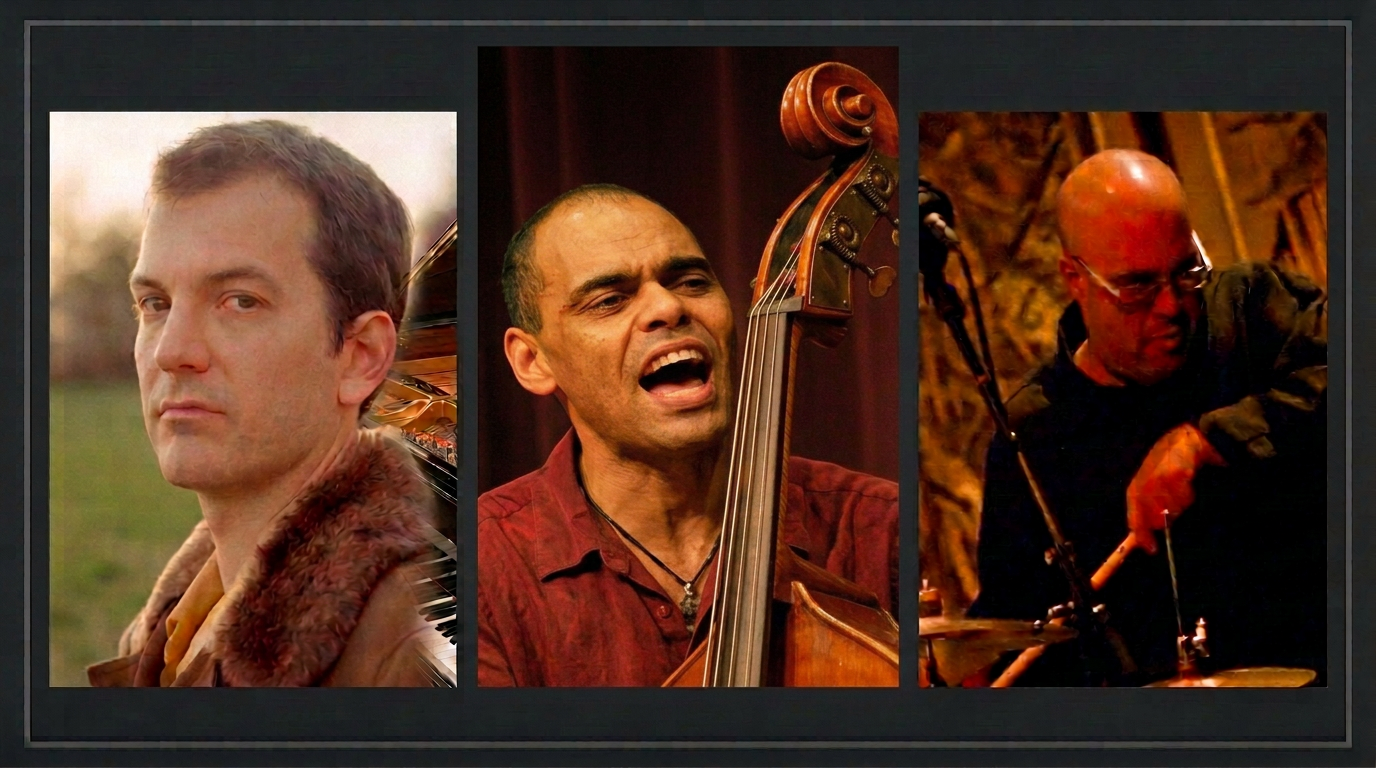
This recording took place at Michael Brody’s Brooklyn studio in April 1993 and was captured simply on one microphone.
Tracks include Thelonious Monk’s ‘Bemsha Swing’ and ‘Evidence’ a tune called ‘Brad Original’ and best of all I think the version of Cole Porter’s classic ‘Love for Sale’ and the beautiful rendition of ‘When I Fall In Love.’
So then a must for Mehldau completists and Parker fans. Or if a beginner listener it’s fine too to start here for both. Okegwo is excellent too and reminds me of how Dezron Douglas approaches things. Trust me: listening may very well make your day… your week… maybe even your year. Back to the future – the future without being at all absurd – our present – began in the 1990s.
More from marlbank – popular overnight

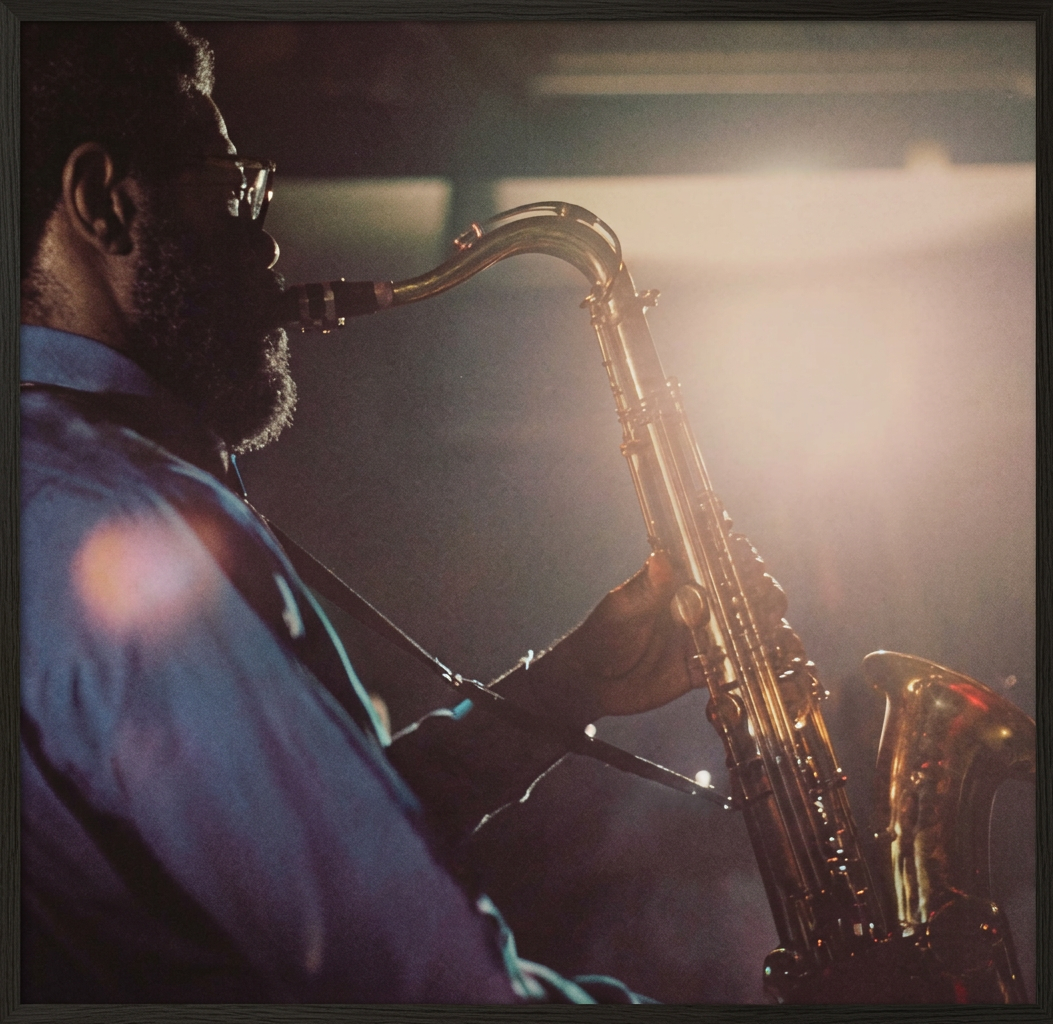 Joe Henderson Quintet, At the Lighthouse – If You're Not Part of the Solution, You're Part of the Problem, Craft Recordings ★★★★22 November 2026
 Soweto Kinch with the London Symphony Orchestra, Soundtrack to the Apocalypse, LSO Live ***23 November 2026
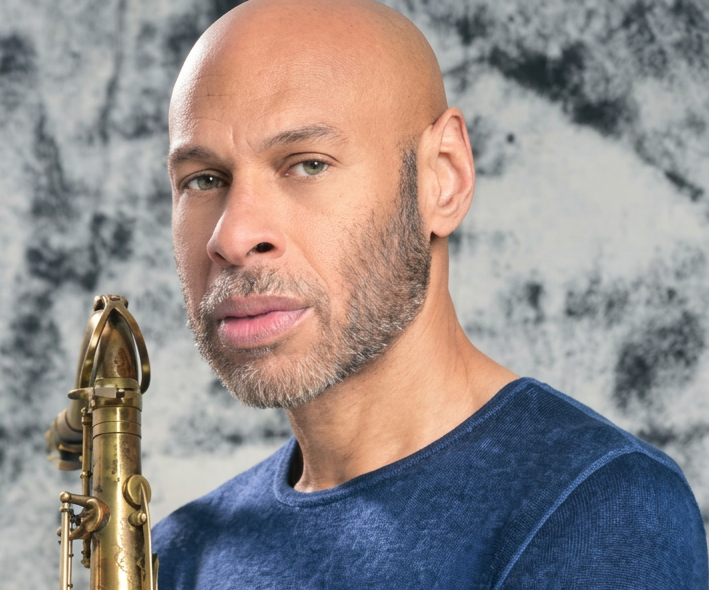 Joshua Redman, If Ever You Would Leave Us (We Play for Rollins), Blue Note **** recommended20 November 2026




You must be logged in to post a comment.