


Cerebral setting: João Paulo Esteves da Silva, left, and Ricardo Toscano
Gazing at the cover with its inkblot trees that make me think somehow of the darkness of the witches in Macbeth, the first thing I thought – no kidding Sherlock – was this looks like the sort of cover and graphic art for their releases that ECM choose to purvey.
But does that comparison stack up when it comes to the music itself? Possibly.
Avant-garde on some tracks – naturalistically melodic on others – the bare bones of what is presented is simple enough and the release falls within the “art” side if being crassly reductive of the art/entertainment dichotomy. Other dichotomies are available before you reach for your rifle spluttering over the temerity of the idea. And shhh, hint: what’s so wrong about being both…
… and all dependent on what you choose to interpret as “entertaining” but I’d say in the sense of diverting rather than jolly japes [none present, m’lud] that’s yes, this ticks both sides of the oblique.
To boil it down to bare bones and slash all that this isn’t an album where there is a cast of thousands nor one enhanced by post production much. Instead it is lonesome saxophone. An alto one at that. A piano where there is severity but not where chasms of silence intervene too much. The territory is if you can imagine this is a fixture that might have come over something like a meeting between Paul Bley and Tim Berne if such a thing is even possible to envisage. But Toscano isn’t as acidly abstract and anarchic a player as the Julius Hemphill loving Berne so reliably is.
Nor is the pianist quite so devastatingly “free” as Bley. Hardly a criticism that. Bley’s sound is at the foundations of “free jazz” with Ornette and on another mountain entirely you’d be foolish to ascend without a sherpa, lots of additional oxygen and the benefit of high altitude training. At the Hillcrest, listen above, where paradoxically it isn’t even that free, the sound is like another girl another planet – they alway flirt with death, they look at you but don’t care about it, to doff the hat – in an entirely different idiom but so what? – to Peter Perrett.
Go later and say Bley’s Oslo 1973 set that took what seems like an aeon to come out and then the penny might drop.
But somehow the pair of Portuguese musicians responsible for the at times rather beautiful duo settings – there are smudges of Lee Konitz perhaps too in the Toscano sense of tonalism if not timbre – manage to scale up their sound into something more momentous without being too grand about it. But this is serious music – you get that on ‘Empty Cistern.’
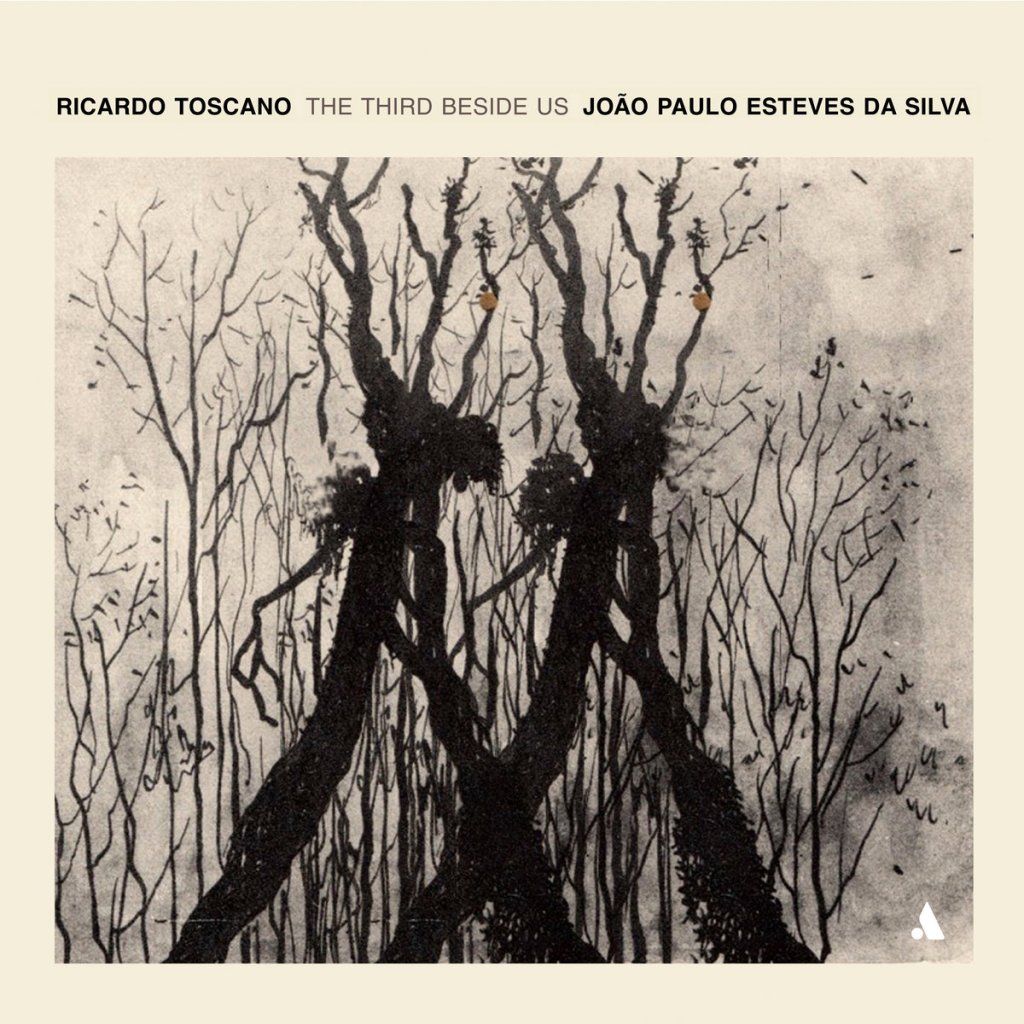
Bowled over? Not quite but I liked it a good deal. It holds water, ahem. Saxophonist Ricardo Toscano has a beefy “you were only supposed to blow the bloody doors of it” Caine do sort of sense of assault to him and yet he adroitly pulls back from all out combustion and mayhem. The pianist João Paulo Esteves da Silva instead provides even more aesthetic balm jutted against the rough and tumble of the serpentine improvising and semi-composed lines. Recorded in an empty hall in the Portuguese capital of Lisbon at a 600 capacity venue inside Culturgest, it’s not going to get the party started. But neither is it a case of “oh I must retreat to a desert island for 20 years” to contemplate my navel either afterwards suitably moved.
The album includes a version of ‘Grito Mudo’ – a piece that means “Silent Scream” in English – that appeared on a Toscano quartet album 8 years on. It’a fine achievement. Afterwards following a session of listening and re-listening I think of these lines from the symbolist poetry of Paul Verlaine that I think sum up the effect:
De la musique avant toute chose,
Et pour cela préfère l’Impair
Plus vague et plus soluble dans l’air,
Sans rien en lui qui pèse ou qui pose.
(In the Arthur Symons translation: “Music first and foremost of all!/Choose your measure of odd not even,/Let it melt in the air of heaven,/Pose not, poise not, but rise and fall.”)



You must be logged in to post a comment.